 Park Board endorses next step to reconnect and restore Lost Lagoon
Plans for Stanley Park’s Lost Lagoon took an important step forward last night, following the endorsement of future exploratory work to reconnect the lagoon to Coal Harbour and Second Beach and improve its ecological health.
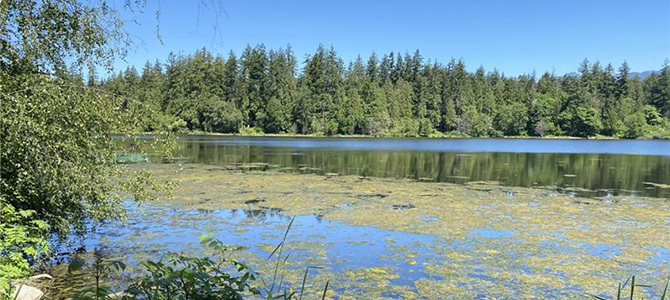
After a century of infilling, Lost Lagoon has experienced a growing bloom of algae, worsening water quality and harming its aquatic and plant life. A survey in 2018 revealed that most of the lagoon is now less than one metre deep.
In response to these issues, staff have been exploring options to reconnect Lost Lagoon through a smaller channel to Second Beach, restoring it as a tidal ecosystem. Combined with new culverts linking the lagoon to Coal Harbour, this would see daily tidal flushing to improve water depth and quality.
"Each year, Lost Lagoon welcomes thousands of visitors who come to enjoy the area’s serene beauty and ecological significance,” says Park Board Chair Tom Digby. “But with algae blooms and fish die-off becoming an increasingly regular occurrence, it’s important we act now and explore long-term solutions for the area’s ecological health. This work won’t happen overnight, and there are important conversations still to be had, but this is an exciting next step in the Park Board’s commitment to restoring nature to this part of the city.”
A redesigned lagoon would create channels and tidal habitat with fluctuating depths. During periods of low tide, visitors to Lost Lagoon might see bird-rich mud flats, while during high tide, the area could appear more marsh-like.
Early design concepts show potential new features, including:
- Creation of approximately 140,000m² of restored tidal lagoon habitat and 2,000m of shoreline.
- Removal of the lagoon’s existing concrete edges and reuse of dredged material to form more dynamic natural landscapes and intertidal habitats.
- Potential viewing opportunities at low tide.
Next steps
Following the Board’s endorsement of the Lost Lagoon tidal reconnection concept, staff will begin engaging with potential funding partners and regulatory agencies. The project is not currently funded, although staff are exploring potential funding streams.
Project staff will draw learnings from the New Brighton Park Shoreline Habitat Restoration project, completed in 2017, which also restored vital wetland habitat and added new viewing opportunities to an area leased by the Park Board from the Vancouver Fraser Port Authority.
As the project progresses, Park Board staff will share further information with interest holders, local residents and visitors.
History of Lost Lagoon
Located at the Coal Harbour entrance to Stanley Park and extending to Ceperley Meadow at Second Beach, the 17ha Lost Lagoon was historically a functional coastal salt marsh and tidal mudflat which served as a harvesting ground for the local First Nations.
In 1926, this natural exchange process was blocked by the completion of the Stanley Park Causeway, and throughout the 20th century, the tidal ecosystem was transformed into a captive pond for recreational and aesthetic purposes.
Today, the lagoon is isolated and shallow, with much of the shoreline non-naturalized, and it is considered an ecologically poor habitat, vulnerable to sea level rise and other climatic events.
Learn more: vancouver.ca/lost-lagoon