
Vancouver’s Emergency Operations Centre
Vancouver’s Emergency Operations Centre is the facility used to coordinate the City’s response to major emergencies or disasters.
Its workstations, equipment, and systems allow City departments and external partners, including first responders, health authorities, transit operators, and utility providers, to share information, support response activities, coordinate plans, and align public information.
On October 15, people across BC can take part in the annual ShakeOut BC earthquake drill External website, opens in new tab by practicing “drop, cover, and hold on.”
The exercise takes only a few minutes, and it highlights a much larger effort happening year-round to help the City prepare for a wide range of situations, from earthquakes to extreme weather, wildfire smoke to major incidents and special events.
The Vancouver Emergency Management Agency (VEMA) helps the City mitigate, prepare for, respond to, and recover from emergencies and disasters.
Preparedness starts long before an emergency
"Emergency management looks a lot less dramatic than people often expect," says Daniel Stevens, Director, VEMA. "Much of the work happens long before an emergency occurs and falls into two areas: mitigation and preparedness."
The team’s mitigation work focuses on working with other departments and external partners to understand risks and take steps to reduce them. This can include measures such as strengthening buildings to better withstand earthquakes or climate adaptation initiatives.
Preparedness focuses on helping people and organizations respond to and recover from emergencies. This work includes planning, training, exercises, including regular Emergency Operations Centre activations, public education, and maintaining the systems and partnerships that support effective emergency response.
Collaboration is a key component
"I think people are sometimes surprised by how much emergency management depends on relationships and collaboration," says Daniel. "VEMA coordinates the response, but successful emergency management requires contributions from City departments and external partners."
One example is the City’s Post-Disaster Building Damage Assessment Plan. Developed in partnership with VEMA, the plan trains employees from several departments to carry out rapid damage assessments after a major earthquake, flood, or other damaging event. This work helps the City identify unsafe buildings, prioritize response efforts, and support community recovery.
A reminder that earthquakes remain a real risk
The importance of preparedness was reinforced in February 2025, when an earthquake near Sechelt was felt across southwestern B.C.
While the event caused limited impacts in Vancouver, it prompted conversations about roles, responsibilities, and response procedures. It also provided an opportunity for the City to practice parts of its emergency plans, including structural assessments of bridges.
The experience reinforced that preparedness requires more than written plans. People need to understand their roles and be ready to act. Even relatively minor events can help test assumptions and identify improvements.
Why ShakeOut BC matters
The annual ShakeOut BC earthquake drill is an opportunity to practice what to do during an earthquake. It is also a reminder to identify hazards at home, at work, and in your neighbourhood, and to plan what you will do after the shaking stops.
"The reality is that during a significant earthquake there may only be seconds to react, so building muscle memory and having a plan matters," says Emma McFarlane, Emergency Management Specialist with VEMA.
You can take a few simple steps to prepare:
- Know the hazards in your home and neighbourhood
- Make a household emergency plan
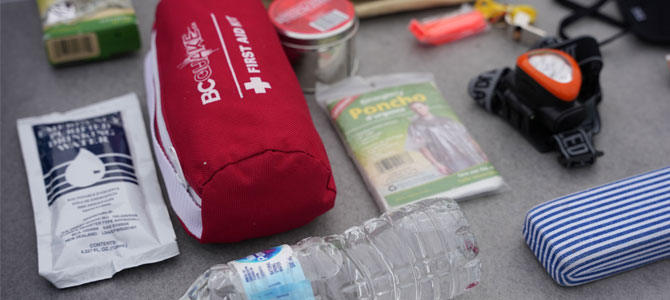
- Gather basic emergency supplies
- Download the Alertable app for notifications about significant local emergencies
"You don't need to do everything at once," says Emma. "Preparedness is built over time, and small actions can make a big difference when an emergency happens. Strong community connections help people recover more quickly."
Supporting people when emergencies happen
VEMA also helps coordinate support for people displaced during an emergency through the provincial Emergency Support Services (ESS) program External website, opens in new tab.
The ESS program provides short-term assistance, such as temporary accommodation, food, pet care and other essential supports, when people are forced to leave their homes for large or small-scale emergencies, such as apartment building fires. On average, VEMA responds to one ESS request a week.
Supported by dedicated volunteers and community partners, ESS helps people find stability and support during some of their most challenging moments. Delivering this support requires extensive planning, coordination and collaboration.
Always learning and improving
Emergency preparedness is ongoing. Every exercise, incident, and conversation provides an opportunity to improve Vancouver’s readiness and resilience.
"What I enjoy most is that the work is always evolving," says Daniel. "Every exercise, incident, and conversation provides an opportunity to learn something new and make improvements that can strengthen the City's readiness over time. Emergencies can be complex, but there is a lot of value in bringing together people with different perspectives to solve problems and improve outcomes."
Take part in ShakeOut BC and review the steps you can take to prepare yourself, your household, and your neighbourhood for an emergency.