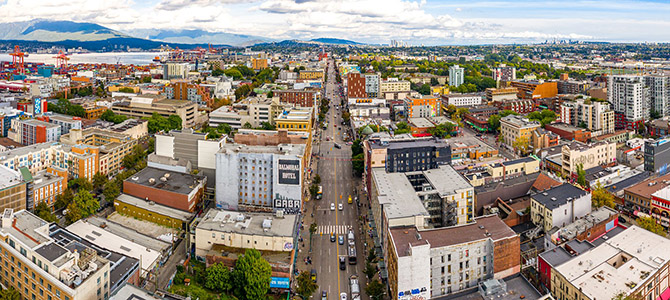
 Vancouver updates policies to support faster delivery of safer homes in the Downtown Eastside
Following a public hearing process, the City of Vancouver approved, with amendments, policy changes PDF file (109 KB) to expand housing options in the Downtown Eastside (DTES). The updates aim to increase affordable housing and accelerate the replacement of aging single room occupancy (SRO) buildings with self-contained homes.
Rising construction costs and outdated policies have slowed the delivery of new homes in the DTES, leaving housing supply unable to keep pace with urgent and growing needs.
The policy updates will make it easier and more financially viable for governments, non-profits and the private sector to deliver new social housing and accelerate the replacement of aging SROs. Together, they advance the DTES Plan’s vision for a mixed-income community with diverse housing options, local-serving shops, social services and cultural activities that support a welcoming and inclusive neighbourhood for all residents.
Key changes include:
- Strengthening tenant protection to ensure existing renters in the DTES are not displaced and have access to housing that remains permanently affordable.
- Aligning social housing definitions with federal and provincial funding programs. In the DTES, the requirement will shift from one-third of units at shelter rates: External website, opens in new tab to 20% of units at shelter rates and 10% at or below Housing Income Limits: External website, opens in new tab (HILs). This change improves flexibility and makes projects more viable, while continuing to address the urgent need for shelter-rate housing.
- Revised inclusionary zoning rules in the Downtown Eastside Oppenheimer District (DEOD), requiring all housing projects to include at least 20% social housing, with the remainder of units as secured rental. The previous 60% social housing requirement made it difficult for projects to secure funding and get built. The new mix balances affordability with viability, ensuring more homes can be built while meeting community needs.
- Allowing increases to height and density for inclusionary social housing and 100% non-profit owned social housing projects so more homes can be delivered. Design guidelines will continue to protect livability through measures that support access to sunlight and key views.
- Financial supports for social housing projects, including an initial $5 million allocation towards a Downtown Eastside Housing Revitalization Grant PDF file (3.1 MB) and expanded eligibility for Development Cost Levy (DCL) waivers.
- Streamlining heritage reviews and updating design guidelines to make the development process faster and more predictable, while ensuring new housing respects the area’s character and supports vibrant, livable streets.
For more information about the Downtown Eastside housing policies, visit: https://www.shapeyourcity.ca/dtes-housing
Background
The Downtown Eastside (DTES) PDF file (144 MB) refers to the broader neighbourhood, while the Downtown Eastside Oppenheimer District (DEOD) is a smaller, specific area within the DTES, centred around Oppenheimer Park and nearby blocks, where more detailed zoning rules apply.
The City’s Single Room Occupancy (SRO) Revitalization Action Plan PDF file (5.5 MB) focuses on the long-term replacement of aging SRO stock with self-contained social housing, while maintaining affordability and minimizing displacement. Progress relies on partnership and funding from provincial and federal governments and non-profit housing partners.