
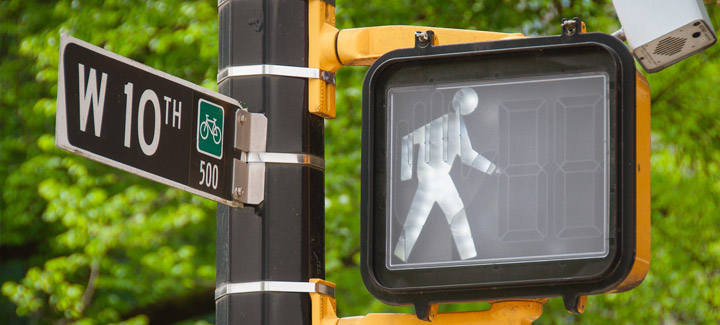
Fatality rates in Vancouver are low compared to other peer cities, but there is still room for improvement.
To reach zero traffic related fatalities and serious injuries, we are:
- Evaluating hospital and ambulance injury data to understand traffic related serious injuries and make decisions based on that data
- Identifying priority intersections and corridors
- Piloting new safety strategies and devices
- Engaging with the public to travel safely
- Continuing to work with our safety partners, such as the Vancouver Police Department External website, opens in new tab (VPD) and the ICBC (Insurance Corporation of BC) to:
- Develop targeted enforcement programs to tackle dangerous behaviours at priority locations
- Inspect commercial vehicles with other municipalities, as well as provincial commercial safety and enforcement agencies
- Cost share infrastructure upgrades that improve safety through ICBC’s Road Improvement Program External website, opens in new tab, Translink's Local Government Funding Program External website, opens in new tab, and Vision Zero BC External website, opens in new tab.
New tools we are piloting
We’ve introduced 4 safety measures that have worked well in other cities.

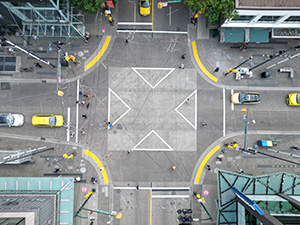 A pedestrian scramble is a signalized intersection that has an exclusive pedestrian-only phase. The crossing allows pedestrians to cross simultaneously in all directions, including diagonally, while vehicles in all directions are stopped.
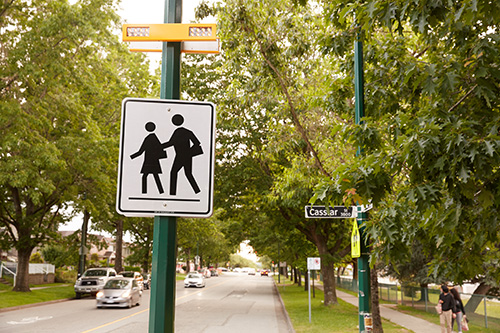 Flashing beacons are high-intensity lights at crosswalks that people activate to alert drivers to stop.
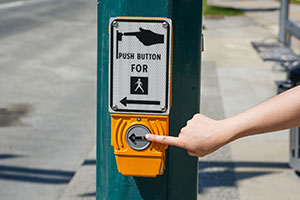 Accessible pedestrian signals use sound and vibration to help people who are blind or have low vision know when to cross at signalized intersections.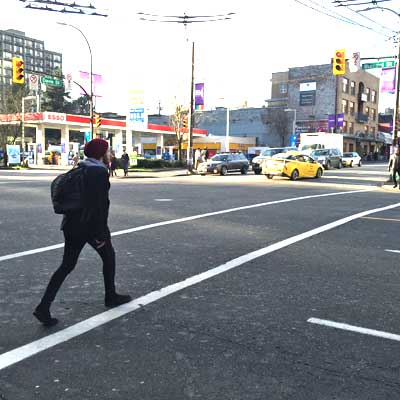
Effectiveness of safety upgrades: Studies and findings
We investigate how safety upgrades reduce collisions and fatalities at priority locations using before and after, near-miss, and collision studies. These findings help us decide where and how to prioritize safety funding.