
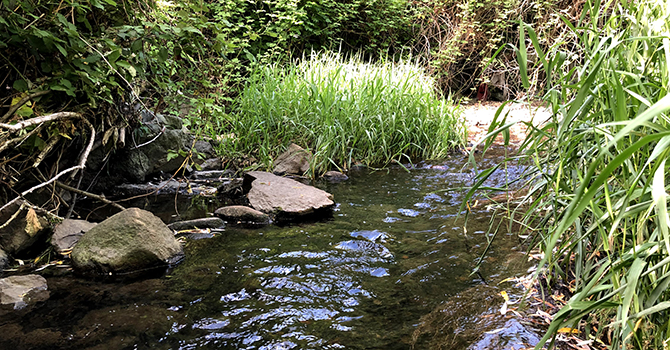
We have been working with local partners and neighbouring municipalities to rehabilitate and enhance Still Creek, with the goal of creating a more naturalized creek corridor.
Key goals
- Daylighting buried portions of the creek, where possible.
- Make room for water by implementing the Still Creek Nature-based Flood Management Project which widens and daylights the creek corridor incrementally.
- Build new green rainwater infrastructure practices throughout the watershed to capture, clean, and infiltrate rainwater before it enters Still Creek.
- Protect groundwater flows to Still Creek.
- Work with community partners to support Still Creek restoration.
Still Creek urban watershed
Beyond providing a habitat for wildlife, Still Creek plays an important role in Vancouver's natural and urban systems:
- It's one of the few remaining salmon-bearing streams in Vancouver.
- It helps prevent flooding by collecting and conveying rainwater from the urban watershed.
- We call it an “urban watershed” because over time land development has changed some of the natural boundaries, altering where water flows.
- All the water within the Still Creek urban watershed drains through Burnaby, Coquitlam and New Westminster, before reaching and joining the Fraser River.
Review a map of the entire Still Creek urban watershed Image file (482 KB) - map provided by Space2place from the Still Creek Watershed Enhancement Opportunities Study
Renfrew and Rupert Station Area Plan
On July 8, 2025, Council unanimously approved the Rupert and Renfrew Station Area Plan.
The project reconfirms plans to open buried sections of Still Creek and adds new protections for groundwater flows. This will keep Still Creek flowing for generations and help to prevent surface-level flooding in Vancouver.

Help our waterways
Pesticide-free lawns and gardens
Pesticides can only be used in gardens to control infestations and destroy health hazards, not to beautify. Choose the right products and get tips.
Blue green systems
Blue green systems are networks of corridors that manage water, contribute to the urban forest, and enhance active transportation routes.