Stanley Park seawall closure between Ferguson Point and Prospect Point
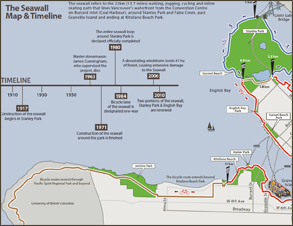
This section of the seawall will remain closed January 26 to 30 to accommodate repair work on sections damaged by recent storms.
The 10km or 13,123 step seawall loop around Stanley Park is Vancouver’s most popular fresh-air attraction.
Stanley Park was home to many Indigenous peoples. It remains a culturally significant area for the local First Nations people today.
Stanley Park is on the unceded territories of the Musqueam, Squamish and Tsleil-Waututh peoples. The park’s villages were occupied for thousands of years by First Nations and newcomers before their eviction in the 20th century.
While you walk through the lush greenery, you might reflect on the people who have entered this space during its long history.
Note Travel on the seawall is one way, counter clockwise, around Stanley Park.

The Vancouver Rowing club building was part of the colonization process. It has been in this location since the early 1900s.
The famed Nine O'Clock Gun booms out the time daily and has done so for more than 100 years.
Brockton Point Lighthouse
Totem poles
Harry Jerome
Girl in a Wetsuit
Empress of Japan figurehead
What is now known as Lumbermen’s Arch is a village site called X̱wáýx̱way (rendered in English as whoi whoi). It was the largest settlement in Stanley Park before it was claimed for use by the Federal Government.
SS Beaver Cairn
Siwash Rock is a 32 million-year-old sea stack (rock outcropping) located just off the seawall between Third Beach and Lions Gate Bridge in Stanley Park.
Third Beach